Self-regulation, co-regulation and fascia: sensing cues of safety
The words self-regulation is a common topic in the current world. We ourselves use it when talking about the MOving Fascia method. The thing is that adding the wor self- to the start can be missleading. While it describes the
Self-regulation does not exist without co-regulation, the
we speak about self-regulation, it can easily sound like something we are meant to do alone, something to apply or manage from within. My experience tells me something different.
Regulation is not a solitary act. It is relational. It emerges through how we meet the ground, how we are met by our environment, and how we sense safety in relationship.
Within the Moving Fascia Method, self-regulation is not trained as a technique. It is re-educated through attention, curiosity and lived experience. It begins with learning to notice the signals of safety that arise in the body – and the signals that tell us when safety feels compromised.
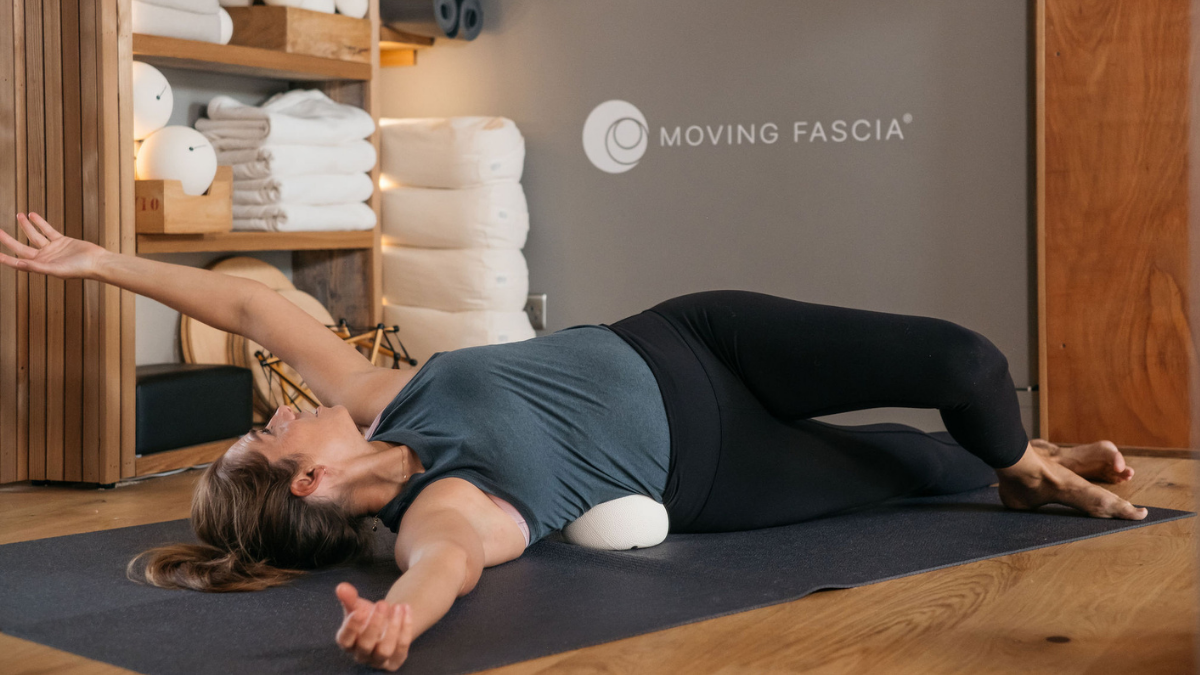
These cues are not abstract. They are tangible and sensory. We can feel them in the rhythm and cadence of our breath, in changes of temperature, in the quality of pressure we receive and give. We sense them in the way force transfers through our tissues, in vibration and texture, in how weight is met by the body. They are present in how we relate to the ground, to the ball, to resistance, and to support.
Practice becomes an opportunity to explore these relationships rather than to impose form. How do I meet the ground today? How do I meet the pressure of the ball through different landmarks of my body? What changes when I soften, when I wait, when I allow movement to arise rather than direct it? Through this exploration, we begin to draw a map of our own body-scape – sensing where we feel available, where we brace, where we rush, where we pause.
This mapping is not about correcting ourselves. It is about becoming more aware of our patterns and, through that awareness, opening the door to other possibilities. New movement can emerge. So can voice and agency. We begin to recognise that regulation is not static – it is dynamic, responsive and alive.
As these practices deepen, the boundary between self-regulation and co-regulation becomes less clear. The same cues we learn to sense in ourselves are present in how we meet others. We may notice the rhythm of our heart and breath in conversation, the tone and volume of our voice, the quality of our gaze. We might sense whether we can stay open to the sound space around us, or whether we feel overwhelmed or pulled away. These signals inform how we listen, how we speak, and how we remain present.
In this way, regulation is not something we achieve before entering relationship. It is something that continues to unfold within relationship. Our capacity to meet others is shaped by how regulated we feel, and at the same time, relationship itself can become a resource for regulation.
This is why the dance between self-regulation and co-regulation matters. It is what allows us to feel safe enough to belong, to stay connected, and to adapt. Within the Moving Fascia Method, practice becomes a place to sense this dance – to learn from it, and to let it inform not only how we move, but how we meet the world and one another.