Fascial Recoil, Adaptability and Resilience
A Moving Fascia Reflection on SERI
I wrote these reflections during a ferry crossing from Spain back to the UK after caring for my mum. Before I had the chance to publish them, I returned to Spain to accompany her in her dying. I have chosen to leave these reflections largely as they were written, allowing them to speak into a very different moment.
Over the past few weeks I have found myself moving through different landscapes.
I spent early May staying on the cliffs of the Jurassic Coast in Dorset, then travelled to the rainforest of Bodmin Moor in Cornwall to immerse myself in the Moving Fascia retreat with a fabulous group of movers. From the coast to the deep forest and then returning briefly to home life and my studio.
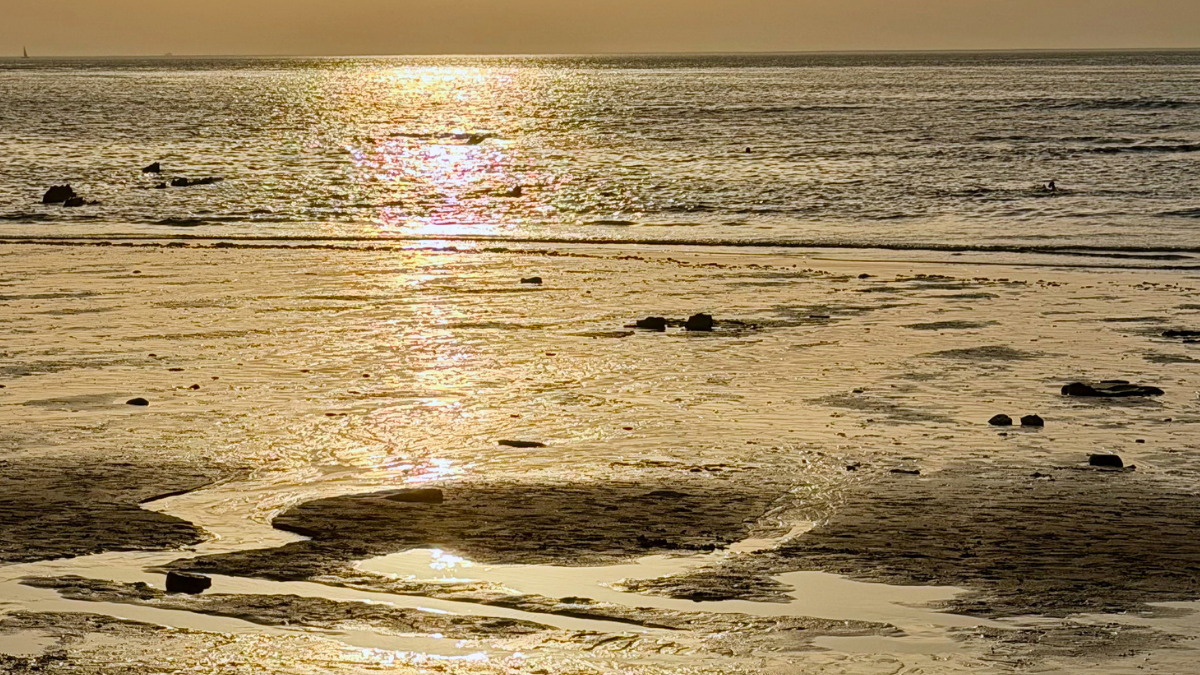
An unexpected turn in life meant that I then had to travel to Spain to care for my mum. Heatwaves and hospitals are a challenging mix. Thankfully, I could also spend some time ducking under the waves, hanging out in the threshold of the foamy crests and being rocked by the sea.
As you most probably know if you are part of my community I don't fly due to the not-so-stable pleura of my right lung, which tends to collapse cyclically. Travelling this time meant sailing. So this journey involved long periods at sea, in the company of the wind, the salty air and the rhythm of the waves. No signal. Yet plenty of communication with the clouds, the sea and the changing weather conditions around me.
There is no stillness at sea, and plenty of time for reflection.
The sea has no interest in certainty. It is a good teacher of change. The wind, the currents, the weather, the constant changing of the colours, the temperature, the rhythm, the rocking. They are great companions when reflecting on fascia, movement and life itself.
Stability is not found through rigidity but through an ongoing relationship with the changing conditions of the living systems we are among. A complexity that can become fragmented as soon as we try to bring words to it.
I have recently been focusing my writing on SERI, the principles of Moving Fascia, as well as preparing to teach an online session on Spring and Fascial Recoil in the Moving Fascia LAB. When I originally planned this session for June, it was intended as a continuation of our exploration of the foot as a sensory interface. It felt fluid to move from practising adaptation and receptivity to exploring recoil and rebound.
After all, our elasticity and our capacity for recoil depend on our ability to receive and adapt to the current conditions.
Rebound, adaptability and receptivity exist in an ongoing conversation.A living ecology where each informs the others.
This is how I have come to understand SERI, not as a sequence of steps to follow, but as a living ecology where each informs the others.
Moving Fascia has never sought to offer a step-by-step method. Fascia is non-linear. Life is non-linear.
Through a biotensegrity lens, stability emerges not from fixing structures in place but through the continuous negotiation of forces and relationships. Adaptation, support, tension and compression are constantly informing one another, much like the changing conditions of life itself.
Rather than stages to progress through, I have come to see SOFTEN, EXPAND, RESTORE and INTEGRATE as currents, or perhaps lenses, through which we can observe adaptation and emergence. At times one may come into focus more than another, yet all remain present within the wider ecology.
SOFTEN is an investigation of receptivity and adaptability. Our willingness to yield, to explore the territories of our own guarding, return to a sense of safety and grow our capacity to receive and meet our own condition.
EXPAND is an investigation of capacity. How we encounter available space and possibility and how we open to meet our range, our window of tolerance and our own elastic boundary.
RESTORE is an investigation of rhythm, repetition and recalibration. From meeting our own rhythm to introducing new pace, new tempo and remodulating to fascial and movement qualities that are needed in each movement. Not returning to where we were, but adapting to where we are now. Learning to recover balance amidst changing conditions.
INTEGRATE is an investigation of relationship. How we inhabit these discoveries in movement, relating to gravity, to force and life itself.
Together SERI forms a living ecology where each informs the others.
Perhaps resilience is less about becoming stronger and more about becoming adaptable and responsive.
Or perhaps we need to reframe the way we understand strength as our ability to remain in relationship with the changing change.
Perhaps we need to reframe balance itself.
Not as resistance to falling.
Not as resistance to wobbling through change.
But as participating in the wobble.
Participating in change.
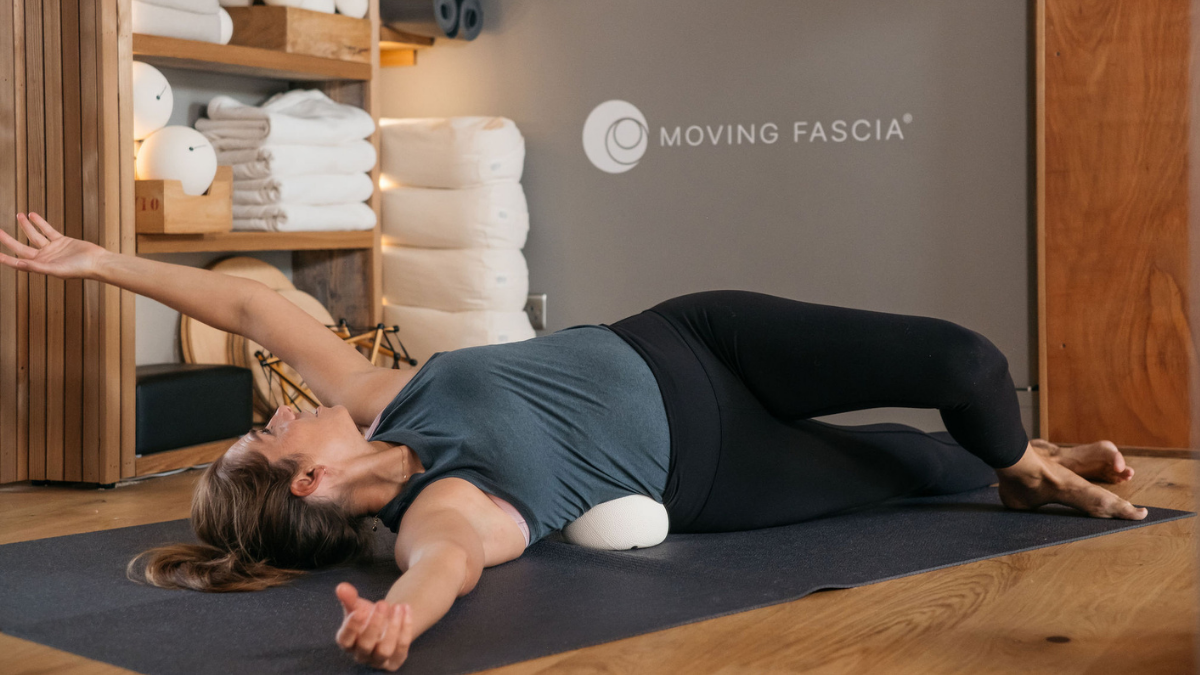
If these reflections resonate with you and you would like to explore them through practice, the Spring and Fascial Recoil session is available inside the Moving Fascia LAB.
The LAB is an evolving library of longer monthly explorations, shorter practice videos and embodied investigations that invite you to experience the principles of Moving Fascia in your own body. Together we explore themes such as adaptability, breath, developmental movement, fascial continuity, resilience and the relationship between movement and environment.
You can learn more about the Moving Fascia LAB and join the community here:
https://www.movingfascia.com/moving-fascia-lab
June 5, 2026
Ana Barretxeguren
Ana Barretxeguren is a movement educator and fascia practitioner, and the creator of the Moving Fascia® method. Her work explores fascia, breath and movement as lived, relational experience.