Reading balance through fascia
In manual therapy and movement education, we are often trained to look for equilibrium, to read twists and spirals in the body and return the body to centre.
But does this create meaningful balance?
Can we choose an approach that honours the spirals knitted into our tissue, anchoring into a sense of ease?
In a recent Moving Fascia LAB live session, a reflection emerged at the end of our practice.
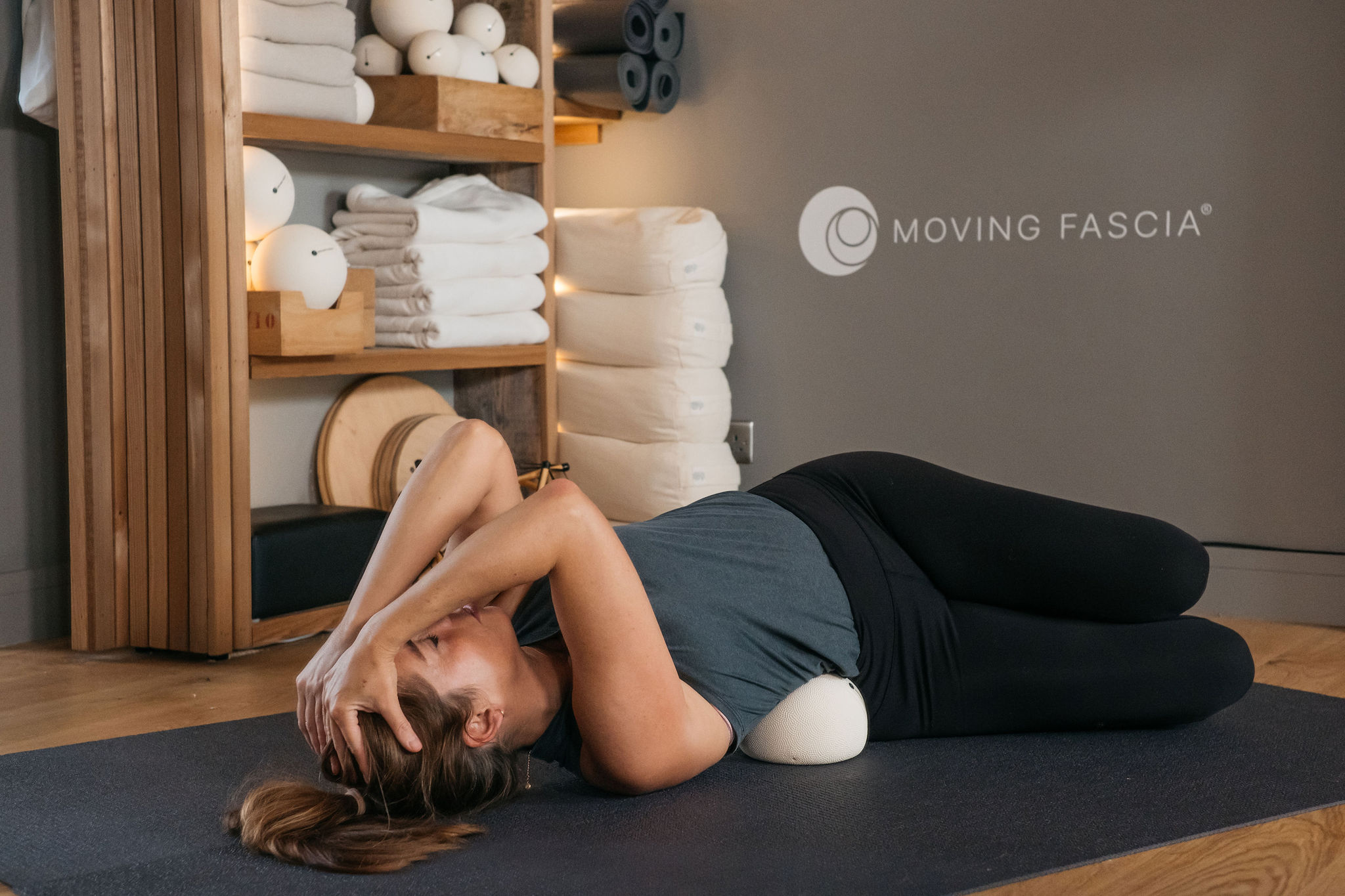
Someone shared how their pelvis kept wanting to rotate in one clear direction. They described a soft, spiralling torque with a very specific and consistent pull.
Sometimes movement expresses a clear direction and, if this direction is part of a habit, it is very likely written into the pattern of the fabric of our body. It can be knitted into the weave of our connective tissue, into the directionality of collagen, elastin and the living architecture of the fascial matrix.
So often in our field, when a torque or a twist appears, our attention moves quickly towards counterbalancing, correcting back to centre, and restoring what we call equilibrium.
Allowing movement to complete its own process
What if we allowed the directional twists of our fabric to continue their own process?
What if, instead of teaching the body to move into the opposite direction in search of symmetry, we followed the spiral the tissue already favours, allowing whatever needs to express to complete its cycle?
When we give space to sense the true movement that is emerging, and allow it to unfold and be followed until something new appears, we often notice the door to new possibilities opening.
We might experience:
• a new quality of breath
• a different tone of movement
• sometimes a moment of stillness
• a subtle change of tide
Often what follows is a recoil, a return.
• A recognising of the unravelling.
• An ease in the counter-spiralling.
• A welcoming, and an owning, of the counterbalance.
Not imposed.
Recognised.
Seen.
From the treatment table onto the mat
In myofascial release, this principle is familiar: allowing the direction of ease to lead, rather than correcting towards an idea of alignment.
In my own investigation of fascia-focused movement, I find there is great meaning in translating this principle from the treatment table onto the mat.
I keep exploring how I can get out of the way.
How I can give space to what is already trying to happen.
How, if I allow the process to unravel, I can quietly reveal my own habits – and how, through listening to what is already there, I can learn about new possibilities, soften what does not serve me, expand my movement vocabulary and the fluency of how I relate to the space around me.
The Moving Fascia balls are an important part of this enquiry for me.
They add valuable feedback.
They support me in recognising my own patterns and in sensing more clearly when the body is engaging in its own innate recalibration, rather than following any kind of instruction.
They enhance my capacity to access ease in the body’s reorganisation from within.
Learning through relationship
This way of working, in movement and in myofascial release, continues to shape my own enquiry.
It feeds not only my own practice and the way I work with others, but also the conversations I engage in – in private and mentoring sessions, and in group holding spaces, whether in person or online.
All of this feeds how I read patterns, how I listen, and how I refine the invitations I offer through movement.
One of the greatest gifts for me at the moment is the depth of connection that is growing within the Moving Fascia LAB. To explore together online, with people joining from different parts of the world, from different timelines and moments in life, and to learn from the reflections, the comments and the questions, continues to nourish this long-term enquiry into fascia, movement and perception.
It reminds me, again and again, that fascia is not something we work on.
It is something we meet in relationship – through attention, through time, and through the willingness to follow what is already unfolding.
February 8, 2026
Ana Barretxeguren
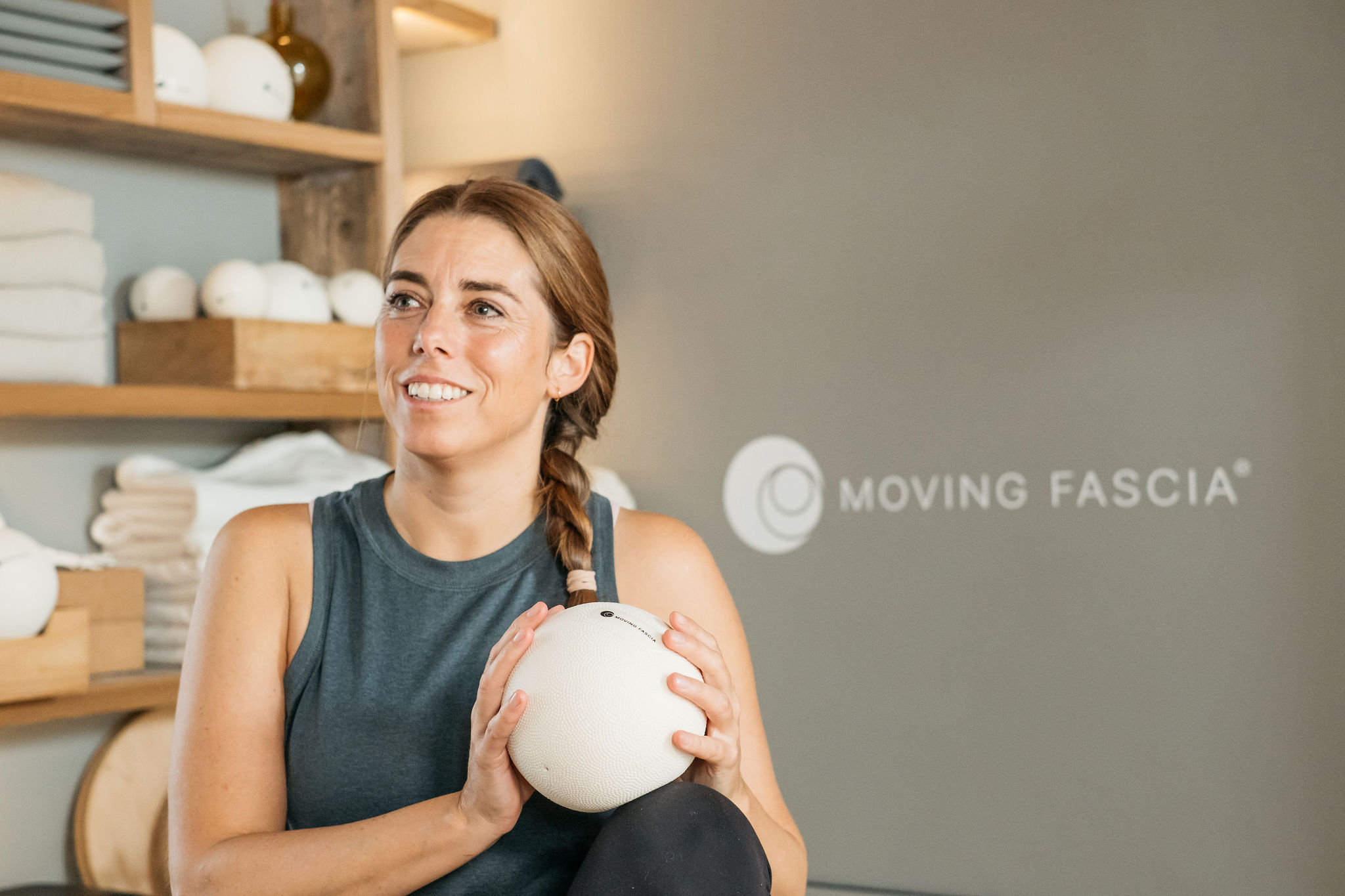
Ana Barretxeguren is a movement educator and fascia practitioner, and the creator of the Moving Fascia® method. Her work explores fascia, breath and movement as lived, relational experience.